80g Protein Indian Meal Plans for Women | Lose Belly Fat Fast

Forty percent of Indian women are abdominally obese, even when their weight looks normal on the scale.
That's four out of every ten women walking around with excess belly fat that's quietly increasing their risk of diabetes, heart disease, and metabolic disorders.
And after analyzing the diet of hundreds of women from our community, I found ONE thing that almost all of them had in common: they were eating less than half the protein their bodies needed.
So today, I'll tell you the exact protein number that can help reverse abdominal obesity and transform your body composition, and it's probably way different from what you think.
And if you're someone who's eating दाल, रोटी, सब्ज़ी every day, working out, maybe even seeing the number on the scale go down, but your belly fat just won't budge, this video is going to be a game-changer for you.
The Hidden Problem: Normal Weight, High Belly Fat

The latest NFHS-Five data shows something shocking - while only twenty-three percent of Indian women are overweight by BMI standards, far more are dealing with dangerous visceral fat. TThose arewomen with "normal" weight on the scale but carrying hidden health risks.
And the biggest culprit is Protein deficiency, combined with our carb-heavy traditional diets.
Why Muscle Loss After 30 Changes Everything?

Here's the scary part that nobody talks about: you start losing muscle mass after the age of thirty. Can you imagine?
After thirty, most of us lose about 3-8% of our muscle mass every ten years. And after sixty? That rate speeds up even more.
And this isn't just about looking toned or fitting into your old jeans. Less muscle means your metabolism slows down, your bones get weaker, you have less energy, and everyday things like standing for long periods, climbing stairs, or carrying heavy bags become harder.
And here's what most women don't realize: when you lose muscle, and your metabolism slows down, your body starts storing more fat, especially around your belly. This is why so many Indian women struggle with abdominal obesity even when they're eating "healthy."
The Good News: This Is Completely Reversible
But here's the good news, and I want you to really hear this: this is COMPLETELY reversible. With the right amount of protein and some basic movement, you can actually maintain and even BUILD muscle as you age.
How Much Protein Do You Really Need?

\So the standard recommendation you'll find everywhere is 0.8 grams of protein per kilogram of body weight. So if you weigh sixty kilos, that's about forty-eight grams of protein per day.
But here's the thing: that's actually just the MINIMUM to prevent deficiency. It's not the amount you need to thrive, to build muscle, or to have optimal energy.
Experts now know we actually need almost forty percent MORE protein than that standard recommendation to actually build and maintain muscle, especially as we age.
So here's what I recommend: aim for closer to 0.8 grams per POUND of your IDEAL body weight. Not your current weight, your ideal, healthy weight.
Let me break this down with an example. Let's say your ideal weight is around 58 kilos, which is about 128 pounds. Using this formula, you'd need around 102 grams of protein per day.
For most Indian women, that sweet spot is somewhere between 80 and 120 grams per day.
Now, 80 grams is your baseline; this is what your body needs to maintain muscle and function properly. But if you want to actually see body recomposition, meaning you want to build muscle, look leaner, and feel stronger, you want to aim closer to 120 grams.
And if you're post-menopausal, this is really important for you. Your body breaks down protein faster during and after menopause. So you may need even MORE protein to prevent weight gain and muscle loss.
Now, if you're the one who's thinking like, "Palak, that sounds like a LOT of protein. Does it really make that much difference?
Let me give you the numbers.
Why Protein Intake Makes a Massive Difference?
In one major study, women eating higher protein lost 60% more body fat and preserved 40% more muscle, while eating the SAME number of calories as the lower protein group.
Same calories. Just more protein, fewercarbs.
And when they added simple exercise to it - just walking for 30 minutes 5 days a week and some basic bodyweight exercises twice a week, the results were even more dramatic.
This is why I keep saying, protein is not just for bodybuilders or people trying to bulk up. It's for every woman who wants to feel strong, have energy, lose that stubborn belly fat, and maintain her health as she ages.
The Biggest Mistake: Protein Timing
Now here's the timing hack, which is going to completely change how you think about your meals.
Take more protein in breakfast!

Even studies back this, eating more protein in the morning than in the evening is actually associated with better muscle gains and lean body mass.
So eating most of your protein at dinner, which is what most of us do, is NOT the right choice!
And get this, when you distribute your protein evenly across meals, about 30 grams per meal, you get about 25% higher muscle protein synthesis compared to when you are eating most of your protein at dinner.
25% more muscle building, just from changing WHEN you eat your protein! This is the hack!

Think about a typical Indian diet, we might have tea and biscuits or poha for breakfast, which is maybe 5 to 10 grams of protein. Then a light lunch with dal and roti. And then we load up on protein at dinner with chicken or paneer, getting maybe 30 grams.
But we need to flip that around! Start your day with 30 to 40 grams of protein at breakfast, and you'll see much better results.
What a High-Protein Indian Diet Actually Looks Like?

Okay, so now let's talk about what everyone actually wants to know: what does 80 grams of protein look like in real, Indian meals that you can actually eat?
And remember what we just learned - we want to start strong at breakfast!
I'm going to give you three different options. Save this, because these meal plans are going to make your life so much easier.
Option 1:
Breakfast - 4-egg omelette + sautéed veggies
1 egg ≈ 6 g protein
4 eggs = 24 g
Veggies add negligible protein (~1-2 g)
Total breakfast ≈ 25-26 g
Lunch - 1 katori dal + rice + 2 pieces chicken or fish
1 katori dal ≈ 9-10 g
2 small pieces of chicken/fish (about 100-120 g total cooked)
≈ 22-25 g
Rice doesn't add much protein (~2-3 g)
✅ Total lunch ≈ 33-38 g
Dinner - 100 g paneer sabzi + quinoa + roti
100 g paneer ≈ 18 g
1 roti ≈ 3 g
½-1 cup quinoa ≈ 4-6 g
✅ Total dinner ≈ 25-27 g
Daily Total Protein: ≈ 83-91 grams
Option 2 -
Breakfast - Moong dal cheela (2 medium) + homemade butter + yogurt
Cheela: 18-20 g
Yogurt: 4-5 g
✅ Total breakfast: 22-25 g
Mid-morning - Protein shake + roasted chana
Protein shake: 18-22 g
Roasted chana (30 g): 6-7 g
✅ Total mid-morning: 24-29 g
Lunch - Fish curry + veg pulao + sautéed veggies
Fish (100-120 g cooked): 22-25 g
Veg pulao + veggies: 3-4 g
✅ Total lunch: 25-29 g
Dinner - Grilled chicken or tofu + vegetables
Chicken (100-120 g): 22-25 g
or
Tofu (100 g): 13-15 g
Veggies: 1-2 g
✅ Dinner with chicken: 23-27 g
or
✅ Dinner with tofu: 14-17 g
Total Daily Protein:
If dinner is chicken: ≈ 94-110 g
If dinner is tofu: ≈ 85-100 g
Option 3 -
Breakfast - 4-egg bhurji + cheese + 2 slices sourdough bread
4 eggs = 24 g
Cheese (20-25 g) = 5-7 g
Sourdough bread (2 slices) = 4-5 g
✅ Total breakfast ≈ 33-36 g
Lunch - Chicken curry + quinoa chapati + sautéed veggies
Chicken (100-120 g cooked) = 22-25 g
Quinoa chapati = 4-5 g
Sautéed veggies = 1-2 g
✅ Total lunch ≈ 27-32 g
Evening - Seed mix + 2 boiled eggs
2 eggs = 12 g
A handful of seeds = 3-4 g
✅ Total evening ≈ 15-16 g
Dinner - Paneer tikka (100 g) + protein-rich dip
Paneer (100 g) = 18 g
Protein-based sauce (curd/tahini/peanut) = 2-3 g
✅ Total dinner ≈ 20-21 g
Total Daily Protein: ≈ 95-105 g protein per day
Quick Protein Reference Guide
For every 100 grams of chicken, you're getting about 25 grams of protein.
For paneer, 100 grams gives you about 18 grams.
One egg is roughly 6 grams.
One katori of dal is about 7 grams.
How to Reach 120g of Protein Easily?

Now, if you want to go from 80 grams to 120 grams, here's what you do.
You add one protein shake during the day.
A good quality whey protein shake will give you about 25 to 30 grams of protein. Add that to your usual 80 to 90 grams from food, and you're at 120 grams EACH DAY.
And this is when your body starts to really change. Because you're not just maintaining muscle anymore, you're actually building it.
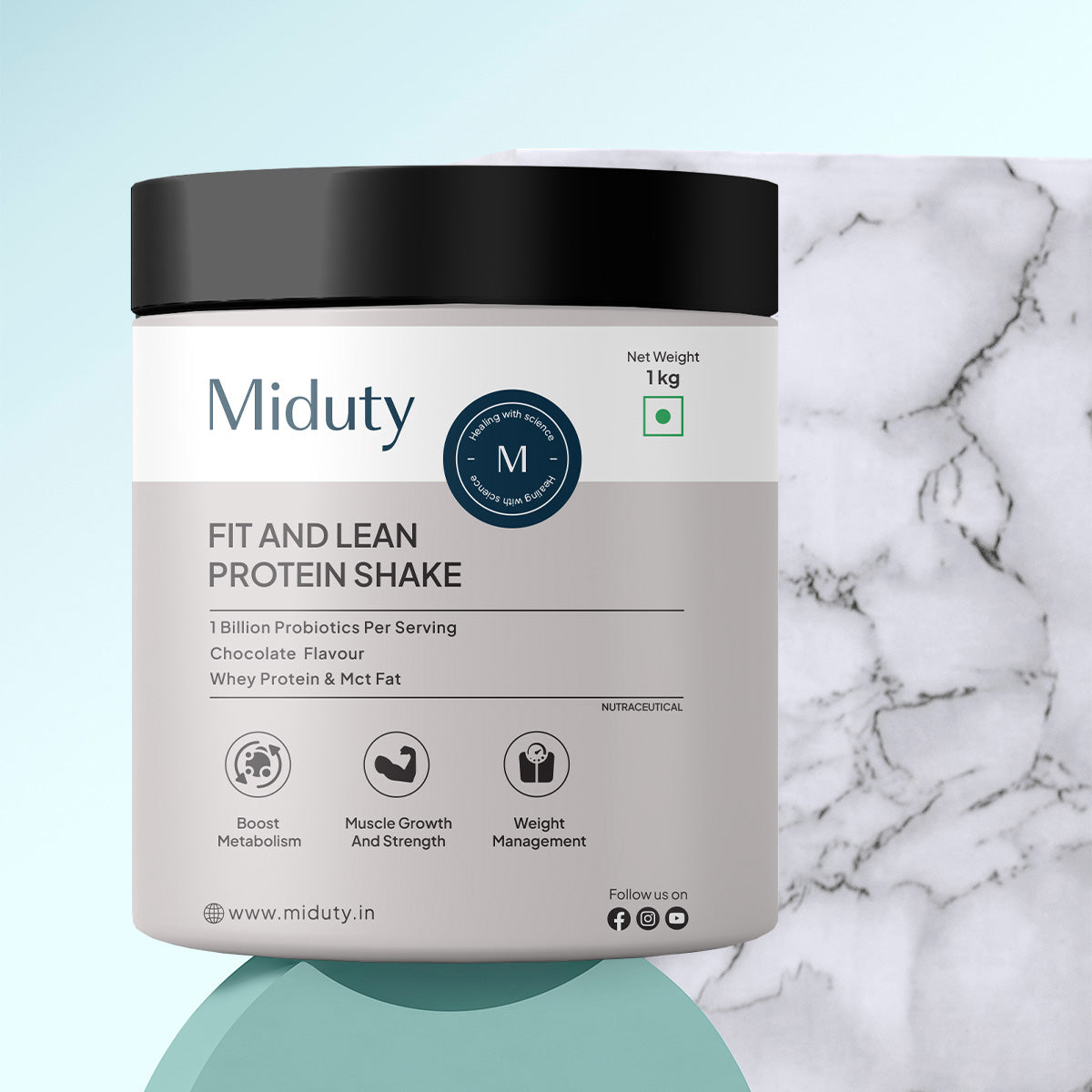
Myduty has a range of protein shakes. To see what fits your regimen, you can check our website www.miduty.in
Does Protein Timing Around Workouts Matter?

So now, let me quickly clear up the whole protein timing debate.
You've probably heard you MUST have protein within 30 minutes after your workout, right? Well, recent research shows that what matters most is your total daily protein intake throughout the day, not the exact timing. The anabolic effects of a protein-rich meal actually last up to 6 hours.
That said, I personally still prefer having protein around my workouts because it helps me with recovery. But don't stress if you can't, just focus on hitting your daily protein goal.
Protein Quality Matters Too
Now, before we wrap up, I need to talk about protein quality because not all protein is created equal.
Animal proteins - like eggs, chicken, and fish are considered high-quality proteins because they have all 9 essential amino acids that your body can't make on its own.
Plant proteins are great too, but you need to combine different sources to get all the amino acids. So दाल with rice, or राजमा with रोटी - these as a combination work better.
There's also this amino acid called leucine that's particularly important for muscle building. It's found in high amounts in whey protein, eggs, and chicken.

And here's something most people don't know - some part of your protein should actually come from collagen. Collagen is crucial for your joints, skin, bones, and connective tissues. You can get this from bone broth, chicken skin, or collagen supplements.
If you are considering collagen supplements, then go for hydrolyzed collagen peptides as they give faster results, being already broken down for the body to absorb. You can give a try to Miduty's Marine Collagen, which has all three types of Collagen - types I, II, and III.
Final Takeaways
Okay, let's quickly recap everything we discussed:
One - aim for 80 to 120 grams of protein daily. Start at 80, go to 120 for real body recomposition.
Two - flip your meals around. More protein at breakfast, not dinner.
Three - Try those three meal plans. Pick any of these and start today.
Next, if you are post-menopausal, you need even MORE protein.
And if you struggle with hitting your protein goals? Add one protein shake.
Look, I know this might seem like a lot of information, but here's what I want you to do: start small. Just try to get to eighty grams consistently for the next two weeks, with a focus on a high-protein breakfast, and see how you feel. I promise you'll notice a difference - more energy, better recovery from workouts, fewer cravings, and over time, a leaner, stronger body.