5 Natural Ways to Support Your Liver and Improve Cholesterol Levels

You've quit fried food. You have stopped eating your favorite butter chicken. You're doing everything right, but your cholesterol is STILL high?
Do you know that every third person in India is suffering from high cholesterol?
LDL up, HDL down? And your doctor's like, "Let's put you on a statin." But how does that make sense? After taking all the precautions? Why are your reports still wrong? The shocking fact is it's not just what you eat, but also how your liver is working.
Yes, your liver!
Today, we will discuss how the liver supports your heart and cholesterol levels, whether statins are an option or not, and how to lower your cholesterol naturally. I will tell you five everyday habits to tackle high cholesterol, and that too, completely naturally.
The Cholesterol Myth: It's Not Just About Fat
So, you've probably been told that cholesterol comes from butter, ghee, or fried food.
But here's what's shocking: your liver actually makes around eighty percent of the cholesterol in your body. Yes, your own body creates cholesterol, because it's not all bad. Cholesterol is needed for hormones, cells, and even brain health.
The liver acts as:
- The producer, making cholesterol as needed.
- The recycler, which breaks down old cholesterol.
- And the cleaner, packaging cholesterol into bile so it can be flushed out through your digestive tract.
What Does "Liver Stagnation" Really Mean?
Now imagine if this whole cholesterol factory slows down.
Not diseased, not cirrhosis, but sluggish.
This is what we call liver stagnation, and it can happen due to:
- Poor bile flow because bile is the only way your body flushes out excess cholesterol
- Fatty liver from Alcohol or even Non-Alcoholic Fatty Liver Disease, which is super common today
- Toxin overload from alcohol, seed oils, sugar, medicines, and processed foods
- Metabolic slowdown due to stress, aging, or nutrient deficiencies
All of this clogs the liver's filters and reduces bile output.
So less bile means less cholesterol elimination.
Now, What Happens Next?
When bile doesn't flow well, cholesterol that was meant to be flushed out, stays stuck inside.
And here's the ripple effect:
- LDL, the "bad" cholesterol, starts rising.
- HDL, the "good" cholesterol, drops.
- Triglycerides go up because the liver isn't processing fats effectively.
This is why people with fatty or sluggish livers often see the following:
- High total cholesterol
- High triglycerides
- Sometimes high blood sugar too (because the liver and insulin are deeply linked)
Even if you eat clean, this internal jam can mess with your reports.
And it becomes a self-feeding loop:
- You eat something unhealthy or get stressed
- Liver slows down, then bile reduces
- Cholesterol starts building up
- Blood markers go haywire
- Fat builds up in the liver
- Liver slows down even more
And when this continues, your liver stops responding. That's why one simple change, like adding bitter foods, can stimulate bile flow and help break this toxic loop.
Karela, methi dana, neem, or even a teaspoon of haldi with pepper will help.
These bitter foods act like natural detoxifiers and help the liver produce enough bile.
It's a small change, but your liver and heart health need more.
It's time to break this cycle with five simple lifestyle shifts that start unclogging your liver from today.
1. Start Your Morning with Walnuts and Flaxseed
If your first bite in the morning is a biscuit or bread, that needs to change. Instead, give your liver what it actually wants: soaked walnuts and flaxseed powder.
Walnuts are rich in omega-3s, which help reduce bad cholesterol and support liver detox. And flaxseeds are full of soluble fiber. That fiber binds excess cholesterol and pulls it out of your system.
You can take these two with warm water or add them to your smoothie every morning. Try it for ten days, and you'll feel the shift in your energy, digestion, and bloating.
While nuts are good, you can't solely rely on them for the complete nutritional requirements of Omega-3. If you live in colder places, you can eat fish daily, and you can incorporate a Fish oil supplement in your routine.
You can give Miduty Krill Omega Complex a try; Ours is free from any kind of contamination with heavy metals.
2. Switch to Cold-Pressed Oils or Ghee

Please stop frying everything in sunflower, soybean, or rice bran oil. These oils are rich in omega-6 fats that damage liver cells and choke its ability to process cholesterol.
What your liver actually needs is simplicity.
Use cold-pressed coconut oil, butter, or good old desi ghee. These fats nourish the liver, not burden it. This one switch can dramatically improve your bile production, and bile is what helps your body clear out cholesterol.
Also, people consider Olive oil a healthier choice, but if we talk about cooking, don't use olive oil. Even if the pack says "high-heat safe," they still break down and release harmful compounds because of the low smoking point.
3. Try Protein Fasting for Liver Repair

If you've got any signs of liver stress, like bloating, fatigue, high cholesterol, or dull skin, I recommend going on a protein fast for a few days.
What's protein fasting? It's exactly what it sounds like: cutting out all high-protein foods for a short period. Just light, healing foods.
This works because when your body stops getting protein temporarily, it naturally shifts into a process called "autophagy."
where it starts cleaning up old, damaged cells and burns stored fat more efficiently, especially in the liver.
Multiple studies have shown that short-term protein restriction can reduce liver fat and promote cellular repair.
So take one full week or even just two days a week to go light. Stick to khichdi, soups, nimbu paani, and coconut water.
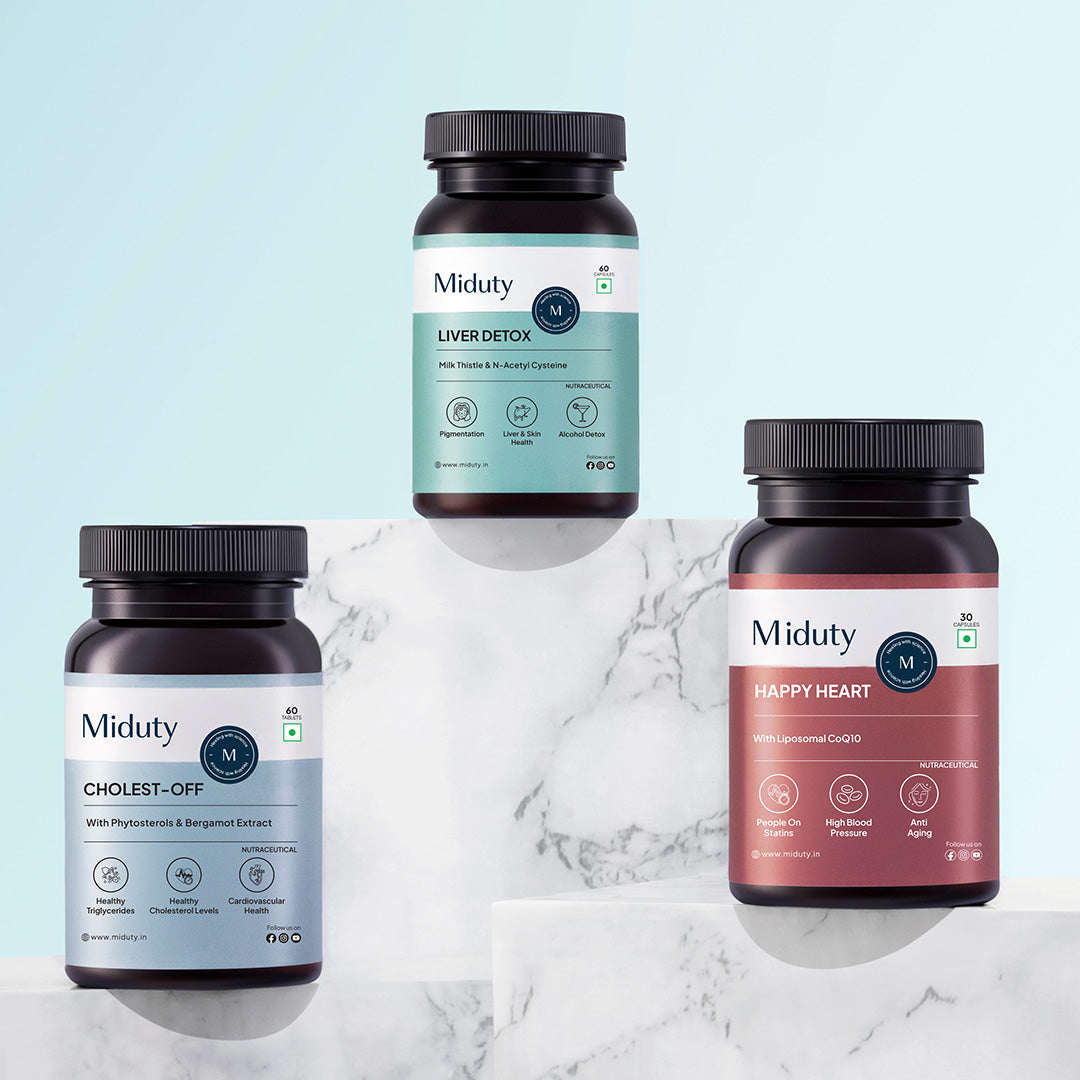
And again, when you give your liver space, support it. Clinically researched ingredients like Milk Thistle and NAC break down accumulated fat in the liver and support natural detox pathways, especially when your body is in repair mode.
There are hundreds of studies on these ingredients. And I, myself, take it every single day to support my liver. You should, too!
And you should also stick to a low-carb diet so that the fat stored in your liver can be reduced naturally.
4. Move Daily, But Don't Overtrain

Most people believe that intense workouts can help lower cholesterol. But overtraining can actually make things worse, especially if your liver is already fatty or sluggish.
Because your liver is responsible for clearing out all the oxidative waste after exercise. When you push too hard, your body creates excess free radicals, and your liver ends up more inflamed, not healthier.
So instead, focus on smart, healing movement that boosts Nitric Oxide, a natural compound that relaxes blood vessels, improves circulation, and supports cholesterol balance.
Here's what can really work for you:
- Brisk walking daily for twenty to thirty minutes
- Wall sits or chair squats, 2-3 rounds of 30 seconds
- Deep breathing during slow stair climbing
Breathe in through your nose slowly as you climb; this increases oxygen efficiency and nitric oxide flow.
- Stretching & light yoga twice a week
5. Add Natural "Statin-Like" Foods to Your Diet
So Statins may lower cholesterol on paper, but they don't fix what's going on inside your body. And the long-term risks include muscle pain, fatigue, mood swings, and even blood sugar issues.
But nature has some smarter options, like the following:
Garlic - A single clove every day. Raw or slightly crushed.
Garlic has been used for centuries for heart and blood health. Modern Indian studies now prove it helps reduce LDL, increase circulation, and prevent cholesterol from sticking to artery walls.
And then Fenugreek. Soak it overnight and have it first thing in the morning. It's one of the most researched cholesterol-lowering seeds in India. It binds to excess fats and flushes them out.
Next is, Amla (Indian Gooseberry). It supports both liver and heart health. You can take it as a fresh fruit or, better, mix a spoon of amla powder in warm water and consume it.
Just start with one or two. Do them consistently. And track your progress.
To Sum Up
Your liver isn't just a detox organ.
It manages your cholesterol too.
And if no one told you that before - Well, now you know.
So let's stop blaming cholesterol. Let's also start supporting the organ behind it.