Eicosapentaenoic Acid (EPA) is a long-chain omega-3 polyunsaturated fatty acid that plays a crucial role in human health, particularly for heart, brain, and joint function. It is one of the key omega-3 fatty acids, alongside docosahexaenoic acid (DHA), found abundantly in marine sources such as fish oil, krill oil, and algal oil.
The primary sources of EPA are fatty fish like salmon, mackerel, and sardines, along with krill and algae. These sources are rich in omega-3 fatty acids, with EPA being a major component. For vegans or those avoiding fish-based products, algal oil is a sustainable alternative that provides both EPA and DHA.
Eicosapentaenoic acid (EPA) is an essential omega-3 fatty acid with profound health benefits, especially for heart health, brain function, and joint health. Whether sourced from fish, krill, or algae, EPA is a valuable addition to any diet for overall wellness.
At Miduty, we focus on sourcing high-quality, scientifically backed ingredients that align with our clean formulation philosophy. EPA (Eicosapentaenoic Acid) is an essential omega-3 fatty acid naturally present in our premium omega-3 sources, making it an integral component of our formulations.
EPA occurs naturally in high-quality fish oil, krill oil, and algal oil used by Miduty, ensuring it is delivered in its original, natural form without synthetic enrichment.
The EPA in Miduty formulations is present in a naturally bioavailable structure, allowing optimal absorption and efficient utilization by the body.
As EPA is inherently part of our omega-3 oils, Miduty avoids isolated EPA, artificial enhancers, or unnecessary additives to maintain clean-label integrity.
Naturally occurring EPA contributes to heart health, inflammation balance, joint comfort, and cognitive and mood support as part of a complete omega-3 profile.
| Uses & Benefits | Description |
| Supports Heart Health | EPA helps reduce triglycerides, lower LDL cholesterol, and improve blood circulation, reducing the risk of heart disease. Studies show EPA can lower triglycerides by up to 30%. [1] |
| Reduces Inflammation | EPA reduces chronic inflammation, benefiting conditions like arthritis. It lowers inflammatory markers such as CRP and interleukins. [2] |
| Improves Brain Function | EPA supports cognitive function and mental health, improving mood and reducing symptoms of depression and cognitive decline. [3] |
| Supports Joint Health | EPA’s anti-inflammatory properties help ease pain and swelling in conditions like rheumatoid arthritis and osteoarthritis. [4] |
| Promotes Eye Health | EPA supports the retina and helps reduce the risk of age-related macular degeneration (AMD), ensuring overall vision health. [5] |
| Improves Skin Health | EPA helps maintain skin hydration, elasticity, and reduces inflammation linked to skin conditions like eczema and psoriasis. |
| Mental Clarity & Mood Support | EPA improves mental clarity, supports mood regulation, and helps with depression and anxiety by balancing key brain neurotransmitters. |
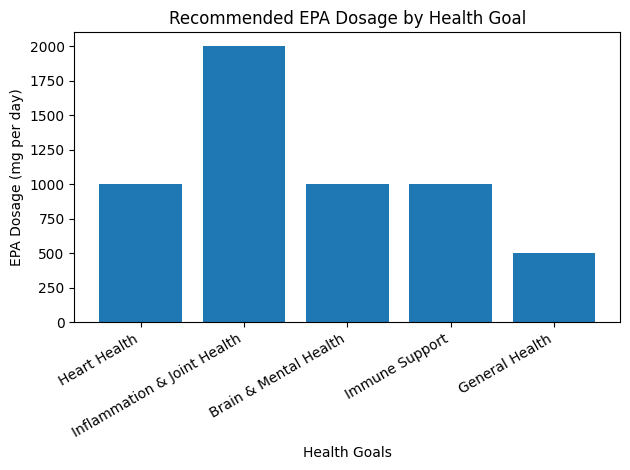
The recommended dosage of EPA (Eicosapentaenoic Acid) varies depending on the form of the supplement, overall omega-3 intake, and the individual’s health goals. Below are general dosage guidelines:
1. For Heart Health: 250 mg to 1,000 mg per day of EPA (often combined with DHA) to support cardiovascular health and healthy triglyceride levels.
2. For Inflammation and Joint Health: 1,000 mg to 2,000 mg per day of EPA to help reduce inflammation and support joint comfort.
3. For Brain and Mental Health: 500 mg to 1,000 mg per day of EPA to support mood balance, cognitive function, and mental well-being.
4. For Immune Support: 500 mg to 1,000 mg per day of EPA to help support a healthy immune response.
5. For General Health and Maintenance: 250 mg to 500 mg per day of EPA as part of a balanced omega-3 intake.
1. For Heart Health: Take EPA daily with meals, preferably those containing healthy fats, to support cardiovascular function, maintain healthy triglyceride levels, and improve overall heart health.
2. For Inflammation and Joint Health: Take EPA consistently with meals to help reduce inflammation, ease joint discomfort, and support mobility, especially during periods of physical strain or aging-related joint concerns.
3. For Brain and Mental Health: For optimal cognitive and mood support, take EPA daily with meals, ideally earlier in the day, to promote mental clarity, emotional balance, and sustained brain function.
4. For Immune Support: Take EPA regularly with meals to support a healthy immune response, particularly during times of increased stress, seasonal changes, or periods of reduced immunity.
5. For Overall Wellness: Use EPA consistently as part of a balanced daily routine, taken with meals, to experience its full range of benefits for heart health, inflammation balance, brain function, and overall vitality.
EPA is generally considered safe for most individuals when taken as directed. However, some mild side effects may occur in certain individuals:
If you experience any adverse reactions, stop using the product and consult with a healthcare provider.
Tips for Best Results
Consult a Professional: If you are pregnant, breastfeeding, or taking medications, consult your doctor before adding EPA supplements to your routine.
Eicosapentaenoic Acid (EPA) stands out as a foundational omega-3 fatty acid with extensive scientific support for its role in cardiovascular health, inflammation balance, brain and mood function, joint comfort, and skin vitality. As part of a complete omega-3 profile, EPA works synergistically with DHA to support whole-body wellness rather than targeting a single system in isolation.
At Miduty, EPA is valued not as an isolated compound, but as a naturally occurring component of premium omega-3 sources, carefully selected to ensure purity, bioavailability, and clean-label integrity. This approach reflects our commitment to formulations that are both effective and aligned with nature, science, and long-term health.
When used consistently and appropriately, EPA can be a powerful ally in supporting daily wellness, resilience, and healthy aging. Whether your goal is heart health, mental clarity, joint support, or overall balance, EPA-rich omega-3 sources offer a well-rounded, evidence-based solution you can trust.
Eicosapentaenoic Acid (EPA) helps regulate inflammation, supports cardiovascular health, and contributes to brain and joint function. It works by influencing the production of anti-inflammatory compounds in the body, making it an important omega-3 fatty acid for overall wellness and long-term health maintenance.
While both EPA and DHA are omega-3 fatty acids, EPA is more directly involved in reducing inflammation and supporting cardiovascular health, whereas DHA plays a larger role in brain structure, vision, and nervous system development. Together, they work synergistically for comprehensive health benefits.
EPA supports heart health by lowering triglycerides, helps reduce chronic inflammation, promotes joint comfort, supports mental clarity and mood balance, and contributes to healthy skin and eye function.
The richest sources of EPA include fatty fish such as salmon, mackerel, and sardines, as well as krill oil and algal oil. Algal oil is a suitable plant-based option for vegans and individuals avoiding fish-derived products.
Daily EPA requirements vary based on individual health goals. General intake ranges from 250–500 mg per day for overall health, up to 1,000–2,000 mg per day for targeted support such as inflammation or joint health. Always consult a healthcare professional for personalized guidance.
Yes, EPA is generally safe for daily use when taken within recommended dosages. Mild side effects such as digestive discomfort or a fishy aftertaste may occur in some individuals, especially at higher doses.
Individuals who are pregnant, breastfeeding, taking blood-thinning medications, or have fish or shellfish allergies should consult a healthcare provider before adding EPA supplements to their routine.
| Sr. No. | Reference |
|---|---|
| 1. | |
| 2. | Role of EPA in Inflammation: Mechanisms, Effects, and Clinical Relevance |
| 3. | Effects of Omega-3 Polyunsaturated Fatty Acids on Brain Functions: A Systematic Review |
| 4. | |
| 5. |